Tag: lettuce

  • CSA Week 4!

    Clockwise from top: Turnips, spring garlic, cabbage, spring onions, lettuce (tiny), radishes, herb fennel.
    Clockwise from top: Turnips, spring garlic, cabbage, spring onions, lettuce (tiny), radishes, herb fennel.

    Welcome to the 4th week of the spring CSA! State of the Garden Every year is different. This year we have plenty of kale and cabbage (the cabbage is just starting to come in) but some of our old friends have suffered from too much rain at exactly the wrong times. Our first two plantings (and part of the third) of lettuce washed away along with some of our topsoil before they even sprouted. On the other hand, the lacinato (AKA Tuscan) kale seems to love the rain and is thriving and, as of now, largely bug free! While picking today we noticed the first few tiny baby squash and cucumbers, so unless the squash bugs outpace us you can look forward to that soon.  Also coming soon: leeks, beets, kohlrabi, and basil. And, for those who stick with us through the summer CSA, tomatoes, peppers, squash, chard, and other summertime joys. We are also keeping an eye on our fruits. We have figs, blueberries, pears, apples, and peaches–much of which is too young to produce. Our figs have done well in the past but are still recovering from near death in a big freeze during the 2014-2015 winter. The pear tree is loaded–look for pears in the late summer.

    In the bags this week:

    Spring onions: We planted lots of onions, because they have so many uses–they should continue for the rest of the CSA! Have you tried them grilled?

    Garlic: As with the spring onions, we believe that there is no such thing as too much garlic. Garlic is one of the food plants that is also used medicinally by many people, and our own anecdotal experience is that eating garlic helps with general health.  Pro tip: when roasting garlic, seal it in aluminum foil or a clay pot. The oxygen in the atmosphere tends to make garlic bitter–but if you roast it in an air-tight environment it will be sweet.

    Lettuce (Green Bibb): Salad. Of course, salad. But maybe, just maybe, you want something different? Like lettuce soup–this recipe is from Emeril Lagasse.  Lettuce was one of the casualties of the spring rains this year. We are trying to rush another planting into production … stay tuned to the blog to see how it goes.

    Turnips: The last of the turnips for this spring. Try roasted turnips with buttered greens (Hint: throw in some radishes to spice up the flavor!) We are sending out two kinds of turnips: “purple top” makes the familiar round turnip but the leaves aren’t as plentiful. “Seven top” makes loads of leaves, but the root is fibrous and should be peeled and cooked thoroughly before you try to eat it.

    Purple top turnip
    Purple top turnip
    Seven top turnip
    “Seven top” turnip

    Radishes: As with the turnips, this may be the last bunch. After the recent rain, some of the radishes are cracked; this just means that they expanded too fast as they took on moisture. Wash and eat as usual. If you make roasted turnips and greens, you can add these to the mix: cook them the same as turnips and they will add a spicy zip.

    Cabbage (OR Lacinato Kale): Hey! This is new! The cabbage is starting to come in, but we counted today and we don’t yet have enough for all customers (we had enough for 3/4). Since the ones that are ready may not make it another week we are giving them out randomly and keeping track of who gets them. If you don’t have cabbage this week, you will get kale–and next week that will be reversed. NOTE: Wash the cabbage well! Cabbage heads form from loose leaves and tighten up as they ripen. No pesticides, but there is likely some garden grit inside each cabbage. What to do with cabbage? Slaw is great, but try stuffed cabbage for an adventure.

    Cabbage: Don't throw out the exterior leaves! They are delicious!
    Cabbage: Don’t throw out the exterior leaves! They are delicious!

    Herb fennel: This is great trimmed into tiny bits as an accent in a salad, over a soup (try it with the lettuce above), or even over vanilla ice cream. Fennel has a gentle licorice flavor that some people love even if they hate licorice. Herb fennel is a different variety of the plant that produces fennel bulbs.

    Reminder: Please return your bag when we deliver new veggies each week. If you keep returning them, you will have two bags to keep at the end of the season. If we didn’t get a bag from you last week, you are getting your veggies in plastic this week–and that is not our preference!
  • Spring 2013 CSA: Week 1

    We had a rocky start to the day, but boxes are in are shareholders’ hands and everyone seemed happy with their shares! Every box smelled divine — green garlic and onions mingling with kale, fresh lettuces, and herbs. If you took home a box for your very own, here’s what you got:

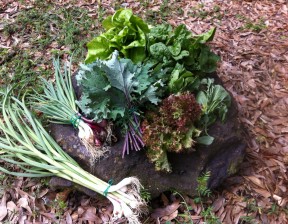
    Clockwise from top: Bibb lettuce, spinach, arugula, Lollo Rosa lettuce, garlic, onions, kale
    Clockwise from top: Bibb lettuce, spinach, arugula, Lollo Rosa lettuce, garlic, onions, kale
    • Kale: This variety, Russian Red, has loved our wet weather and is taking off, so expect more in the coming weeks. Saute it in a pan or make one of our all-time favorites — Kale chips! Guilt-free snack food at its finest, and so easy to make!
    • Bibb Lettuce: This loose head lettuce has a buttery consistency and makes a lovely salad.
    • Lollo Rosa Lettuce: This leaf lettuce has a sharper flavor and adds texture — great for holding on to salad dressings.
    • Green Garlic: Young garlic has a delicious mild flavor when you use it in a saute. Use the whole stem in a soup or broth, or use the stiff neck like you would a leek. Green garlic doesn’t last like cured, mature garlic will; try to use it in the next week or so. If it starts to go brown, make your own garlic powder!
    • Spring Onions: Use like a regular onion. Chop them up in sautes and casseroles, or use them in salads. You can also use the stem like a scallion — chop it up and use for garnish or in soups. The bunch in your box contains a mix of red, white, and yellow green onions.
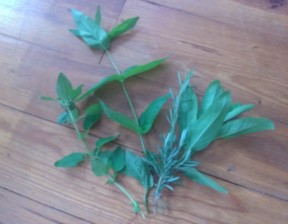
    • Mixed Herbs: Rosemary, oregano, mountain mint, and sage. Use together or separately… Boil green beans in water with sage and mountain mint, use rosemary with potatoes or pork and oregano in any Italian food or salad dressing. If you’re feeling adventurous, put your sprig into moist soil and see if it roots — before you know it, you’ll be growing your own herbs on your window sill!
    • Arugula: This lovely spring green has a bracing bite. Use a little in your salad for a big kick.
    • Spinach: Rich, green spinach has been happier in the wet cool weather than it usually is in the Memphis heat — enjoy! Cook it in a saute pan and serve as a wilted green or use it fresh in a salad… we love it under salmon or tuna with a corn salsa over the top.
    Left to right: oregano, mountain mint, rosemary, and sage.

    Left to right: oregano, mountain mint, rosemary, and sage.

    Once Upon a Time…

    …Not so long ago and very, very close to home, we had a workshare volunteer (Bobbie Ann) help us harvest and wash a ton of fresh greens. We tucked them snugly into bed in the new CSA-only refrigerator for the night, thinking that we had a leg up on the Saturday delivery. Imagine our alarm when, the next day (Saturday) all those greens were stiff and frozen. Lesson learned! Our fairy tale first pickup may have turned out to be a parable, but it still had a happy ending. Our loss is your gain–we bring you vegetables that are fresher than even we expected! Luckily we overplanted by enough that reharvesting shouldn’t cut into future harvests. If you are a geek about such things and wonder just how we schedule planting and harvesting, you might look at these spreadsheets from North Carolina State University that we adapted to develop our own schedule.

    Wash those veggies!

    Remember, even though we don’t use chemical fertilizers or pesticides, these veggies are fresh from the ground–they may come with some rich soil still attached. We give everything a rinse in clear, cool water before it goes into your boxes, but we recommend that you wash again before you cook or eat. Especially in the wet weather we’ve had, dirt tends to cling. For your eating pleasure, wash them in cool water to avoid grit.

    Don’t be a hater…

    Is there a bug on your greens? Cool. That’s how plants naturally grow in a healthy environment that encourages a total living ecosystem: with some bugs here and there. Any hitchhikers should come off in the wash.

    Let us know how it goes!

    If you have a great recipe to share with the CSA community, you can post it here or on our page onĀ The Facebook.