Farmers, gardeners, and plant-lovers! Bring your extra seed and share with other like-minded folks. If you don’t have any seed to swap, that is OK! Seed packets will be available by donation, too. Look for more details on our FaceBook Page.
Talk with other gardeners, share tips, and enjoy a day on the farm!
Bringing seed? Bring along small envelopes and the following information: Plant name When harvested (or year bought) Stories and tips to help other growers.
CHILI POT LUCK! We will have chili (with meat, semi-spicy) available for a donation. Bring a side dish to share and join in the fun!
BRING YOUR OWN BEVERAGES!
Weather permitting we will also have tours, hayrides and who knows what else.
We had two new litters of pigs born yesterday! Angelina Jowlie (see video, below) had a litter of 10; Kim Lardashian (not in the video) had a litter of 7.
This is the second time that our piglet births have been synchronized, and mothers and babies all seem healthy and happy. We’ve been feeding our hogs with the spent mash from the distillery of Pyramid Vodka, so we have plenty of food rolling in even though the weather is getting cold. Usually we try to time new litters to arrive with the warm weather of Spring, but like Jeff Goldblum’s character in Jurassic Park says: “life finds a way.” In this case, “the way” was through a weak spot in the fence separating the boar and the sows.
We have hog shares available for sale, and we will also be selling piglets once they reach weaning age in 6-8 weeks. Contact us for more details!
One of our favorite treats is a roasted fresh ham. People are used to pink, pre-sliced, cured ham. Fresh ham, on the other hand, is pork-colored and succulent. Think ‘pork roast’.
Our favorite recipe is a variation of one that friends in New York made once upon a time, that they in turn got from a Food Network program: roasted fresh ham with cider glaze. That said, it seems pretty hard to go wrong with a fresh ham as long as you keep a few things in mind:
If it is frozen, let it thaw completely before cooking.
Cook on medium heat; the recipe link above starts high and drops to 325, but we have also just started at 325.
Until you are really good at judging by feel, use a meat thermometer. Shoot for 165 Fahrenheit in the center.
The above recipe uses a cider glaze. Cider is both sweet and slightly acidic, and those are both nice compliments to the meat and its fat content. Other examples: figs and balsamic vinegar, pears and dry wine, even your favorite cola (in theory.)
A fresh ham makes a great presentation, and is big. Make it for friends, with feel-good sides like roasted potatoes, roasted Brussels sprouts, or beet and goat cheese salad.
This has been a strange spring; last year, we were all about the kohlrabi. Year before that, we had beets (and beets, and more beets). This year, we are covered in greens! Turnip, mustard, spinach… greens everywhere.
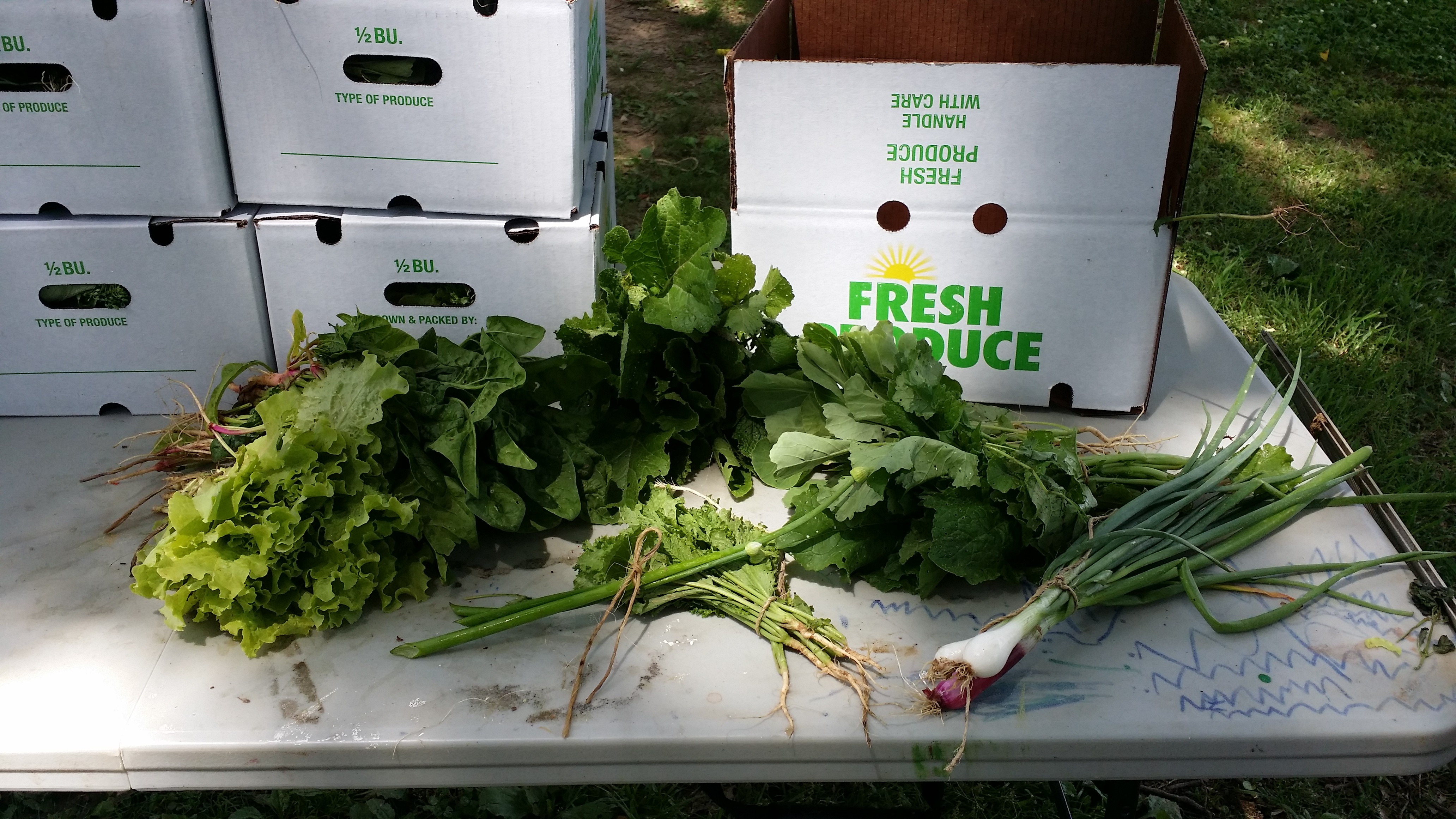
We have beets and kohlrabi (technically, that counts as a green, too) coming–but we have had to replant a couple of times due to the odd weather. Here is what we have on tap for this week:
Left to right: Green leaf lettuce, turnip and mustard greens, spinach, collards, curly mustard, broccoli raab, green onions, onion scapes (center).
Green leaf lettuce is nearing the end of its cycle–don’t worry: there is other lettuce coming next week.
Greens, including: Turnip/mustard greens, Spinach, Collards, Curly mustard : Lots of greens, still. A quick search for mustard greens turns up dozens of recipes. All of these are full of essential nutrients–we need to eat more! If you are looking to kick it up a notch with something new, try this recipe for Italian white bean and mustard green soup.
Broccoli raab also known as rapini is in the box! This is our first successful attempt at sending this through the CSA; last year, it was not yet ready one week and past ready the next. This is great sauteed with garlic (or green onions) in a little olive oil to wilt, then seasoned with salt, pepper, and a dash of balsamic vinegar.
Onion scapes are a seasonal delicacy. We only had enough for a few per box; you can use them anywhere you would chop green onions, but try this onion scape pesto with pasta for a light spring meal.
“…farming is about twenty per cent agriculture and eighty per cent mending something that has got busted. Farming is a sort of glorified repair job.” -E.B. White
In the quote above, White talks about the importance of repair work in farming. Just this morning as we were preparing to plant vegetables, we spent an unexpected hour working on the tiller–the same tiller that I just worked on last night. Luckily we have boxes and bins full of old bolts, so these sorts of repairs are not necessarily difficult, just time consuming.
It wasn’t at all White’s intention, but I like to think of farming as a repair job in two senses. One, it is a job that requires a lot of ‘fixing things.’ Things get used, and inevitably they break. Hoe handles, drill bits, bolts, chains, belts, and all manner of equipment end up on the operating table (or shop floor).
But, repair also means “to come together” or “a popular gathering place.” Farming is not a lonely job; it is often done with help from friends, family, and neighbors, and the farm itself can be a gathering place. So, farming is a job to which one may repair. If you would like to join us at the farm, think about coming to our Spring Open House on April 17 (rain date TBD if necessary.) Because sometimes, we all need a little repair.
So I promised to update the blog this week since the box had a couple outliers in it. I’ve been remiss in weekly updates. Our busy season is now our wonderfully-horrifically-stupendously-insanely-busy season, and the blog has been falling off the radar. But this week, I’m back! Here you go:
Clockwise From Top: Figs (two varieties), green beans, pears, loose-leaf lettuce, rosemary, tomato (or two), radishes, radish greens.
Our box this week mixes the best of summer and fall. Our tomato production is starting to drop off, but our fall lettuce planting is starting to come in!
Figs: We had a double crop of figs this year, and these are some of the biggest we’ve ever seen on this tree. You’ll also find some smaller ones mixed in, from a different tree variety that is nearing the end of its season. The big ones should continue for another week or two. Eat them fresh on a salad; bake them with honey or sorghum and have them for dessert over ice cream or marscapone cheese; or dehydrate them in the oven or a dehydrator. To get juice for jelly, cover them with water, boil for 20 minutes, pour through a colander, let sit for 8 hours, and reserve the juice for jelly. The juice will freeze nicely if you want to do all your jelly making at once. Jam or jelly questions? Email them to me at oakhill1832@gmail.com.
Green Beans: Boil them with aromatic herbs or stir fry them for a slightly crunchier dish. They freeze wonderfully, too. Drop them in boiling water for about 3 minutes, until they turn bright green. Remove with tongs and drop straight into ice water. Allow to dry on a paper towel, pack into a plastic bag, squeeze out as much air as possible, label with the date, and pop them in the freezer.
Pears: These are lovely in pies, sliced fresh over a salad, canned, or jellied. I love to eat them fresh, but they are harder than the Anjou pears you’ll find in stores. This is heirloom stock planted by Ted’s grandmother.
Lettuce: We thinned the lettuce this week. It’s warm enough that some of it may bolt before next weekend, so we wanted to make sure you got a taste of our most recent lettuce planting. Enjoy this in a salad while it’s fresh, or slice the tomato, cook up some bacon, and have a BLT.
Rosemary: Rosemary, figs, and pork make an excellent combination. We like to stuff a whole tenderloin or thick-cut pork chops with a few sliced figs and rosemary–sometimes with a soft cheese if we’re feeling decadent. Roast or cook in a skillet for a really delectable experience.
Tomato: Set in the window sill for a day or two if it needs further ripening, slice, and add to sandwiches or salads. There’s nothing like a truly fresh tomato.
Radishes: Our radishes are going gangbusters–they’ve loved the cooler weather and are taking off with the heat at the height of their life cycle. We thinned this week, so I’ve included both finished radishes and immature greens. Check out these recipes for gluten-free radish soup and radish top soup–or add to stir fries and fresh salads for a bit of bite.
Radish Greens: As I said, great in soups, salads, or stir fries. They’ve got a super-distinct flavor, so adjust the amount to your taste.
Happy cooking! We’ve loved sending out full boxes of fruits and veggies, and we hope you’re having fun with them. Wish us luck in the weeks ahead… Fall is closing in!
I told the new apprentice we were having lamb’s quarters for dinner.
“I won’t have any. I’m a vegetarian,” she replied.
With a smile, I corrected myself. “Some people call it fat hen.”
“I don’t eat chicken either,” she responded with a frown.
“It’s also called goosefoot,” I countered, suppressing a grin.
“Not goose, not even the feet, do I eat,” she said with force.
And I agreed, “Pigweed is a more common name for it.”
“No matter what kind of animal it is, I am NOT going to eat it,” she stated firmly, her eyes shining with fervor and unshed tears.
I confessed, now openly laughing. “It’s a weed. A plant. A cooked green!”
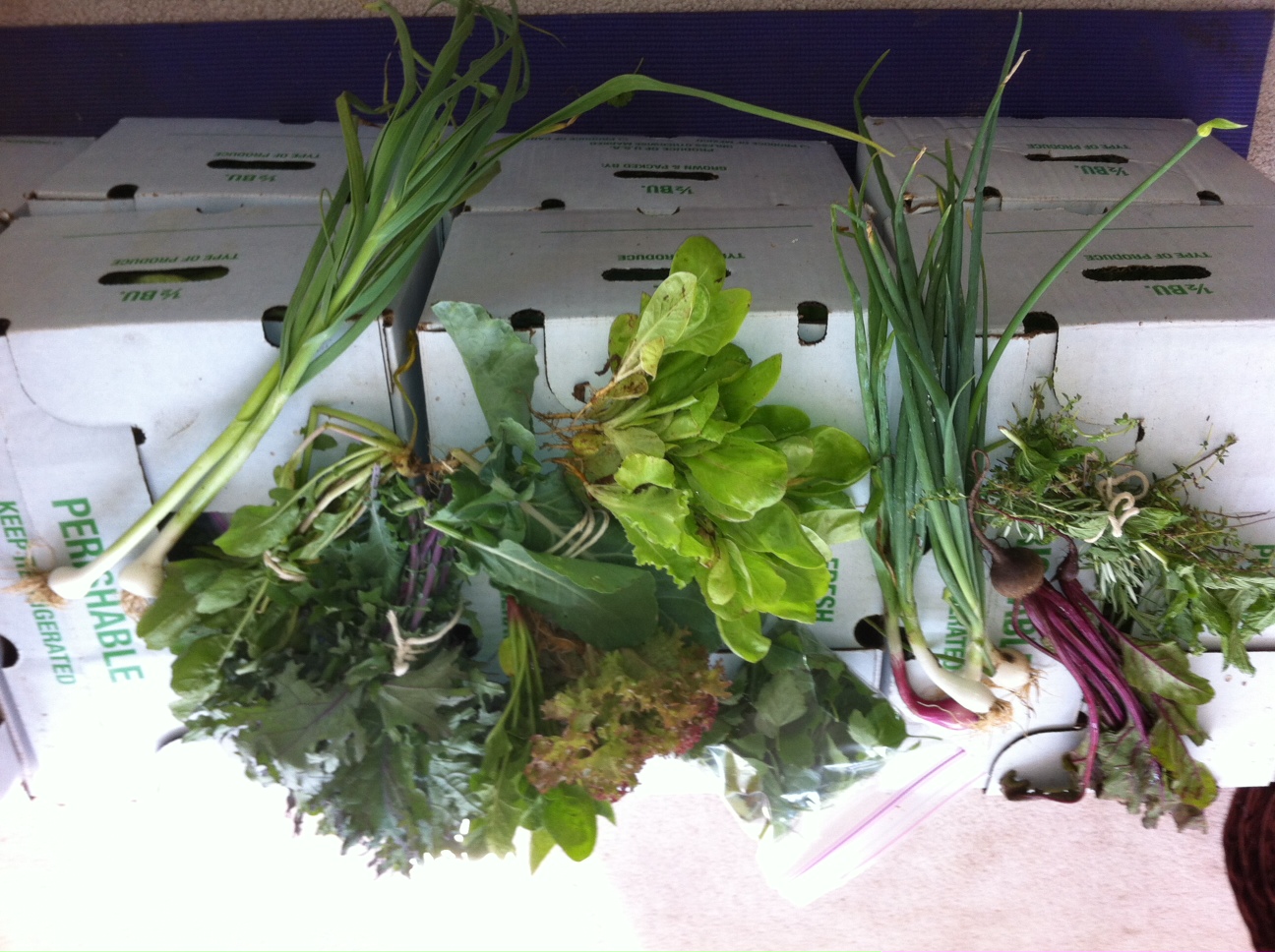
In this weeks box: Mixed herbs (thyme, mint, rosemary), beets, spring onions, bibb lettuce, lollo rossa lettuce, lamb’s quarters (in the small bag), spinach, broccoli greens, kale, arugula, spring garlic
CSA Week 3: What is in the box?
Kale: This is a spring favorite, but it will come to an end eventually as hot weather hits. Enjoy while you can. If you want a fresh adventure, try this chilled kale and apple soup. We haven’t tried it, but I bet this would be great with a dollop of sour cream and a sprig of fresh mint…
Spinach: Say farewell to our little friend. This looks like the end of the spinach. Luckly, her wild cousin has made an appearance–see lamb’s quarters below!
Lamb’s Quarters: Goosefoot, fat hen, whatever you call it–this is a delicious spinach cousin; use it where you would use any other green. Like spinach, be sure you rinse it well, since it tends to accumulate garden dust. If you dig around the Interwebs, you can find lots of ideas–but here is a starting point. In Mexico, Lamb’s Quarters is known as quelites (as are some other greens). Let us know what you think–we have a TON of this, but harvesting the small leaves is time consuming.
Beets: Beet greens are delicious this time of year, when they’re large but still succulent. Wilt them with other greens in a stir fry or saute. Beets are one of our favorite vegetables. You can roast them and put them a salad–but sometimes I like to wash them and eat them raw.
Arugula: Wham! That’s flavor. Arugula picks up spice as it gets closer to bolting, and ours definitely has a zing. It is a shame that tomatoes don’t really come in until summer, because arugula and tomato mix well. (Hint: try a BLT, but with lots of arugula instead of lettuce and with added avocado. Bacon, Arugula, Tomato, Mayo, Avocado, and a pinch of sea salt (NaCN). The BATMAN sandwich is born!)
Green Onions: Do you notice a trend? Our baby onions are growing up. Yes, we still remember when these were just little sprouts. Before long, they will be all grown up.
Spring Garlic: What else can we say about Garlic? This is one of our specialties, a favorite of the Farm. We put it in almost everything; use it like a green onion, or use it like garlic. One of our heroes, Alice Waters, has this recipe for green garlic spaghetti. Wow. Just… wow.
Broccoli and Cauliflower Greens: We served these up last week, and they are back; the chard needs a break for a week, and the strange spring weather is not helping our broccoli to form heads. We had broccoli greens in a crustless quiche this morning, along with baby garlic and three cheeses, and it was amazing. This one is an original, not a link:
Crustless Quiche with ???
1/3 cup cooked quinoa 4 eggs, beaten 1/3 cup milk 1/3 cup feta cheese 1/3 cup parmesan 1/3 cup cheddar Salt and Pepper to taste
Preheat the oven to 350 degrees. Butter a glass pie pan. Mix all ingredients, pour into pan, bake for 45 minutes. We actually baked it for 30 minutes, then turned off the oven and came back to the house an hour later, and it was fine. This is a forgiving recipe–play with it!
Lollo Rosa and Bibb Lettuce: “Looks like we’re having salad again…” WAIT! Not so fast! Sure, you can use these lettuces for a salad, but why not make something like these Vietnamese spicy shrimp wraps (you can do this with tofu, too)? Make the filling, put the lettuce on a plate, and let your family and/or guests fill each leaf on their own. Be sure not to forget the lime dipping sauce (see link above).
In other news…
So, a few months back we mentioned on the FaceBook that we might try to start selling coffee through the farm. Turns out, almost all of the coffee we can get is sold through one of the big coffee brokerages, and we really wanted to develop a relationship with a particular farmer, someone who had stories we could share about specific people and specific coffee. We don’t have a deal yet, but we may have a lead! We met someone who sells coffee from a farm in Honduras. As of now this is just a teaser, but we will let you know how things go!
Starting on February 1, we’ll be accepting 20 shareholders for our spring CSA. Once a week for six weeks, you’ll receive a 1/2 bushel box full of fresh produce from the farm. In at least three of those boxes, you’ll also get a surprise free gift from us — farm-fresh eggs, a hand-crocheted vegetable bag, or a jar of jelly, for example.
Price and Workshares
This is our second year, and we are still offering a low rate: $144 for six weeks. That’s $24 per week — less than most other CSAs in the area.
If that seems too high in these tough economic times, we have another option: you can volunteer for two, 4-hour shifts on the farm (weeding, planting, helping with farm projects, weeding, etc.) and reduce your share price to $105. That’s a $39 discount, and you get to spend time in the fresh air and REALLY see where your food comes from.
For a bigger commitment, we also have two full workshares (free veggies all season!) available.
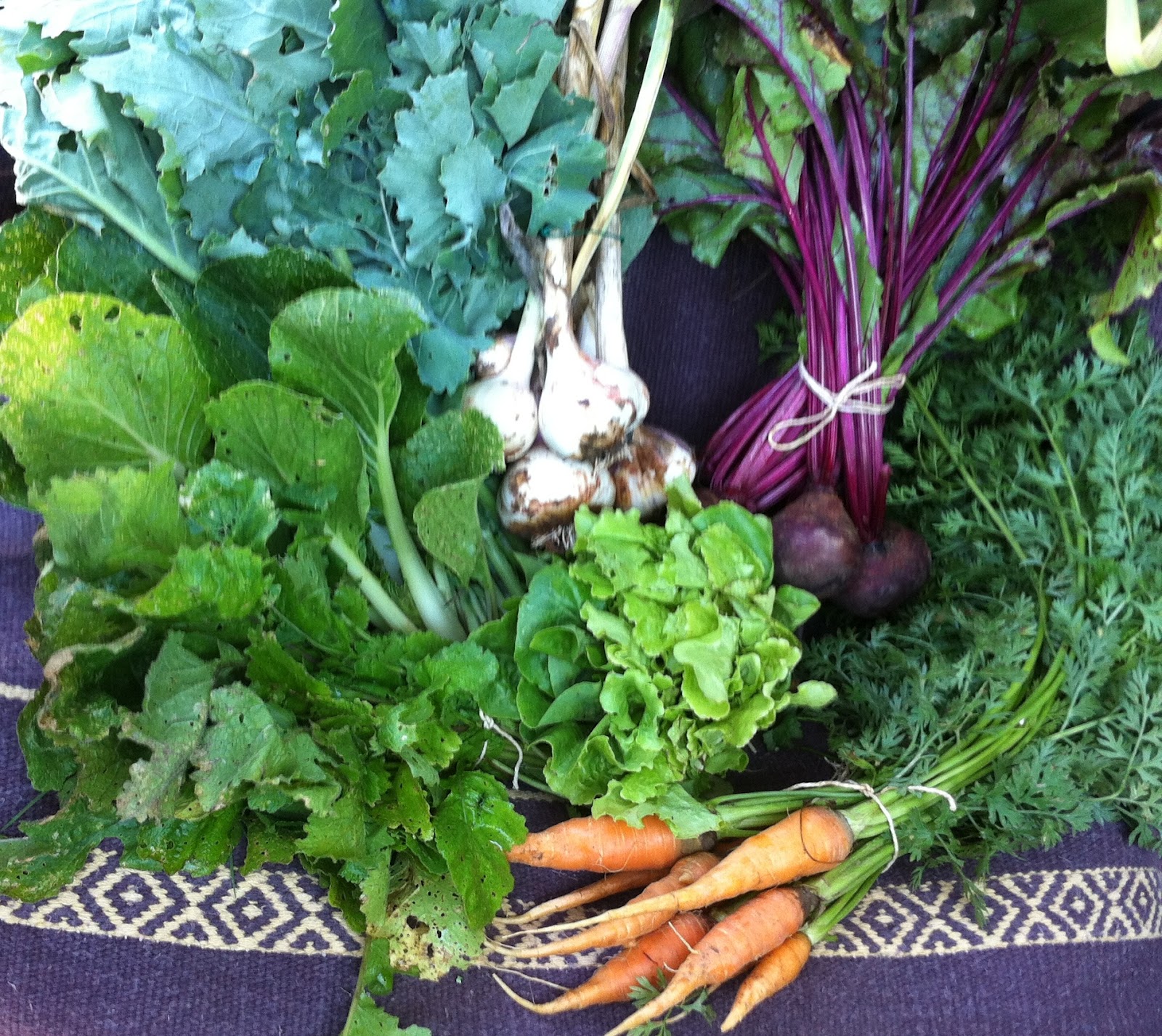
From top left: kale, garlic, beets, carrots, lettuce (two varieties — Black Seeded Simpson and Butter Crunch), turnip greens, and pac choi. Enjoy!
Week 3 has arrived!
It’s that time again! Scroll down for a list of all the veggies in your box this week and some suggestions on how to use them.
Hog-sized thanks are in order.
Thanks to all our shareholders for your flexibility this week in picking up your vegetables on a Tuesday instead of at your normal times. We’re excited about traveling to our friends’ wedding this weekend… but we’re sorry it interfered with the normal veggie pick-up.
Thanks, too, to our friends Rodney and Terese. They came out to camp on Monday night (complete with campfire and guitar circle) — and then stayed to help us harvest, wash, and pack the veggie boxes on Tuesday. I’m not sure we could have packed all 11 boxes in a single morning without the extra hands! Many hands made for light work, and many laughs made for light-hearted work.
The Balance of Farm Life
We even had time for a farm-fresh breakfast on the front porch — eggs from our chickens; bacon from our beloved kneecap-biting former buddy Kevin Bacon; homemade biscuits (with Kevin Bacon’s lard), home-made fig jelly, milk gravy, and a glorious champagne cheese provided by Terese. We know how to balance hard work with reaping the rewards :).
This Week’s Bounty
This week we have for your munching pleasure:
Kale: These greens are wonderful in a simple saute — start with a clove of our chopped fresh garlic and a little chopped onion sauteing in a splash of olive oil on medium-high heat. Add the kale (cut out any large stems), stir, and allow to cook down. As it starts to wilt, add in a little water (or vegetable stock for more flavor), cover, and turn down to medium heat. Cook to taste; some people like it with a little crunch left, some cook ’til its thoroughly wilted.
Garlic: This will probably be our last week of fresh garlic — you may have one more after we harvest, as we allow the heads to hang and cure. You’ll notice that the heads aren’t as clean as in previous weeks. As the garlic gets close to maturity, it’s important to leave all the outer layers attached to help it last as long as possible. In past weeks I’ve stripped that outer skin to create a “prettier” garlic, but at this age it’s time to start leaving the papery shell on the outside.
Beets: We hope you all enjoy beets as much as we do; we have a bumper crop this year! We like them best roasted in the oven (without peeling the skins) to bring out the natural sweetness. These aren’t your mama’s vinegary pickled beets :).
Carrots: You’ll notice that some of our carrots aren’t as “perfect” as the grocery store variety — but these are normal for a home-grown crop. The wonderfully spiced flavor of fresh carrots was one of the most eye-opening experiences of growing my own food in the first year… it’s still one of my favorite flavors. You can also use the tops as part of a salad (use sparingly as they can be bitter), as an alternative to parsley (they’re in the same family), or to make carrot top tea. The tea is a diuretic and carminative that’s good for gout, kidney and liver support, gas, and bloating.
Lettuce: This is the last week of the lettuce season. With the onset of hot weather, lettuce grows tall and leggy (bolts) and turns bitter. You’ll notice that the flavor is stronger this week than it’s been in the past — by next week they’ll be inedible. You have two varieties this week: butter crunch, which just matured, and the black seeded simpson you’ll recognize from previous weeks.
Turnip greens: We planted these between two rows of cabbage as an experimental crop. It’s rare to see turnips planted this time of year, but they help hold water in the surrounding soil and may turn out to be a nice companion plant for us. This variety is bred to emphasize greens over actual turnips, so you’ll find plenty of greens but only tiny ‘roots’ instead of big turnips. The experiment was a rousing success for the early season (almost no weeds in that section, and nice wet soil without watering), but they’ve begun to crowd the surrounding cabbage so we’ve now pulled them for your munching pleasure.
Pac Choi: Your friendly neighborhood pac choi is back. This is the first year we’ve grown it, and I think it’s my new favorite vegetable. We should have pac choi for at least one more week if all goes well; it’s reported to be heat tolerant and it’s looking big and healthy.
The CSA so far has been an amazing experience. We thank you for the warm welcome we’ve had in the community — we’re making new friends and learning new things with every box. We thank you, too, for generously sharing your hard-earned money and supporting us in our start-up days. This old farm needs a lot of love, and you’re helping us save a valuable resource for future Maclin generations — and our larger community.
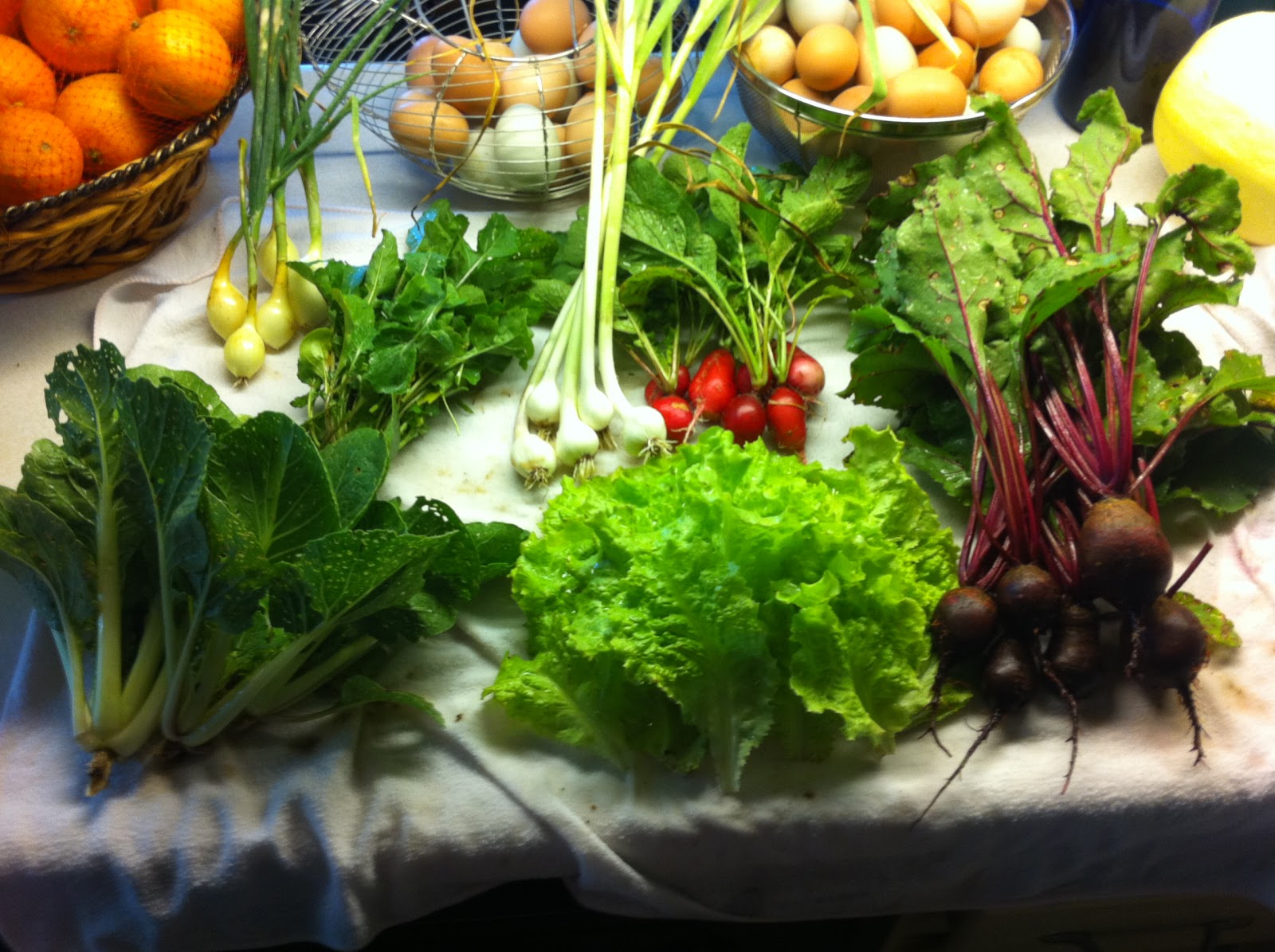
Clockwise from top left: onions, arugula, garlic, radishes, beets, lettuce, pac choi.
So you’ve waited all spring for the first mystery box of vegetables to arrive–and now it is time! In the box for this week:
Spring onions: Bigger than green onions but not grown-ups yet. Use like green onions (tops) or like any onion. These are yellow and mild.
Baby garlic: This one is a treat! Don’t try to store it for the long term (that garlic is coming later). Intense flavor is great in guacamole, soups, salad dressings, or anywhere you like garlic.
Red globe radishes: OK, radishes are a standard spring crop–but other than slicing them in a salad what can you do with them? Try radish top soup or braised radishes for a start.
Arugula! We love spring arugula for its peppery taste; of course you can mix it with lettuce for a salad, but it is also great with…
Beets: There are more beets to come, and the first of the season are smaller than what will come later. Use the tops like swiss chard. Our favorite way to eat beets is roasted (wrap them in foil, 350 degree oven for 30 minutes, peel after roasting) with goat cheese and arugula (goat cheese not included!)
Lettuce: This is black seeded Simpson, a loose leaf lettuce that makes a killer salad.
Pak choi: This mini-choi (also spelled bok choi) is great raw in salads, in stir-fries, or ust lightly sauteed (tablespoon of your favorite oil, teaspoon chopped garlic, add pak choi and sautee just until wilted, add a pinch of salt and pepper and a splash of balsamic vinegar.)
Don’t forget to share your favorite recipes with us and your fellow members on our page on the Facebook.
In future weeks, look for more lettuce, beets, and arugula, storage garlic, kale, cucumbers, kohlrabi, and more! We’ll post each week’s box contents here along with some suggestions for cooking and serving.
Two last things:
1) Wash! Our produce is grown without herbicides or pesticides and we wash it all before it gets to you, but there is likely residual dirt. Now, some people like a little dirt, but if you don’t want that extra gritty flavor we advise washing everything before eating.
2) Bugs! One reason to wash again is to eliminate any lingering critters. You may notice holes in the leaves (of the pak choi and beets in particular). See above: no pesticides. That means that the little bugs get to nibble some, too.