Yep. We are here and working on improvements around the farm. A CSA is a labor of love as much as one of economy, and while we still love the farm we both work off the farm to make ends meet. Ellie is a GIS Applications Analyst (she does digital mapping) and Ted is a teacher–high school during the day, and the University of Memphis in the evenings. With so much going on, we might still have been able to eek out a CSA for spring, but hanging people’s CSA memberships on “might” didn’t seem smart.
Even so, we are actually doing, in some ways, more on the farm than we have in previous years. Since we started the CSA we have talked about using permaculture practices, but when it came down to planting time we gave our first efforts to spring annuals like kale, beets, and cabbage. This year we are putting more time into the apple orchard, the newly-expanded herb garden, the edible landscape around the house, and the hardscaping (fences, gates, and borders) to support it all. We see things growing in new ways, and instead of planting rows and rows of seeds we are tending plants that will grow and produce for years–if we have patience and love.I
f you want a CSA, you should check out Oleo Acres–or if they are full any of the other CSAs around the area (if you run a CSA, leave a comment on this post with a link!)
If you like herbs, both fresh and dried, we are planting both culinary and non-culinary herbs: thyme, rosemary, lavender, oregano, sage, lots of different mints, rue, wormwood, yarrow, fennel, mullein, bee balm, and more. Stay tuned!
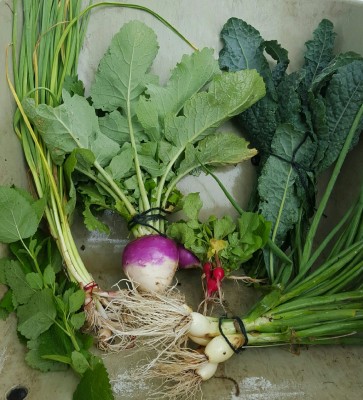
Clockwise from top: Turnips, spring garlic, cabbage, spring onions, lettuce (tiny), radishes, herb fennel.
Welcome to the 4th week of the spring CSA! State of the Garden Every year is different. This year we have plenty of kale and cabbage (the cabbage is just starting to come in) but some of our old friends have suffered from too much rain at exactly the wrong times. Our first two plantings (and part of the third) of lettuce washed away along with some of our topsoil before they even sprouted. On the other hand, the lacinato (AKA Tuscan) kale seems to love the rain and is thriving and, as of now, largely bug free! While picking today we noticed the first few tiny baby squash and cucumbers, so unless the squash bugs outpace us you can look forward to that soon. Also coming soon: leeks, beets, kohlrabi, and basil. And, for those who stick with us through the summer CSA, tomatoes, peppers, squash, chard, and other summertime joys. We are also keeping an eye on our fruits. We have figs, blueberries, pears, apples, and peaches–much of which is too young to produce. Our figs have done well in the past but are still recovering from near death in a big freeze during the 2014-2015 winter. The pear tree is loaded–look for pears in the late summer.
In the bags this week:
Spring onions: We planted lots of onions, because they have so many uses–they should continue for the rest of the CSA! Have you tried them grilled?
Garlic: As with the spring onions, we believe that there is no such thing as too much garlic. Garlic is one of the food plants that is also used medicinally by many people, and our own anecdotal experience is that eating garlic helps with general health. Pro tip: when roasting garlic, seal it in aluminum foil or a clay pot. The oxygen in the atmosphere tends to make garlic bitter–but if you roast it in an air-tight environment it will be sweet.
Lettuce (Green Bibb): Salad. Of course, salad. But maybe, just maybe, you want something different? Like lettuce soup–this recipe is from Emeril Lagasse. Lettuce was one of the casualties of the spring rains this year. We are trying to rush another planting into production … stay tuned to the blog to see how it goes.
Turnips: The last of the turnips for this spring. Try roasted turnips with buttered greens (Hint: throw in some radishes to spice up the flavor!) We are sending out two kinds of turnips: “purple top” makes the familiar round turnip but the leaves aren’t as plentiful. “Seven top” makes loads of leaves, but the root is fibrous and should be peeled and cooked thoroughly before you try to eat it.
Purple top turnip“Seven top” turnip
Radishes: As with the turnips, this may be the last bunch. After the recent rain, some of the radishes are cracked; this just means that they expanded too fast as they took on moisture. Wash and eat as usual. If you make roasted turnips and greens, you can add these to the mix: cook them the same as turnips and they will add a spicy zip.
Cabbage (OR Lacinato Kale): Hey! This is new! The cabbage is starting to come in, but we counted today and we don’t yet have enough for all customers (we had enough for 3/4). Since the ones that are ready may not make it another week we are giving them out randomly and keeping track of who gets them. If you don’t have cabbage this week, you will get kale–and next week that will be reversed. NOTE: Wash the cabbage well! Cabbage heads form from loose leaves and tighten up as they ripen. No pesticides, but there is likely some garden grit inside each cabbage. What to do with cabbage? Slaw is great, but try stuffed cabbage for an adventure.
Cabbage: Don’t throw out the exterior leaves! They are delicious!
Herb fennel: This is great trimmed into tiny bits as an accent in a salad, over a soup (try it with the lettuce above), or even over vanilla ice cream. Fennel has a gentle licorice flavor that some people love even if they hate licorice. Herb fennel is a different variety of the plant that produces fennel bulbs.
Reminder: Please return your bag when we deliver new veggies each week. If you keep returning them, you will have two bags to keep at the end of the season. If we didn’t get a bag from you last week, you are getting your veggies in plastic this week–and that is not our preference!
Here we go! Welcome to the Spring 2016 CSA. Here at Oak Hill, we love this time of year. The world has exploded in greenery and growth and we’re starting to see the results of planning and hard work that started back at the beginning of the year. Reminder: We wash your veggies each week after harvest, but we always recommend you wash them again, most especially on damp and rainy days like this one.
This week, you have in your boxes:
Clockwise from top center: Turnips, radishes + arugula, Lacinato kale, spring onions, lemon balm, and baby garlic.
Turnips: These year-round simple favorites soak up the flavors of anything you cook them with. Boil them on the stove and then mash them with salt and butter, or roast them with a little honey at 400 degrees until tender for a sweeter treat.
For a more adventurous favorite of ours (especially if you’ve done one of our hog shares), try this Chinese Pork and Veggie Hot Pot from Eating Well. For a down-home variant with a little Asian flare, omit the store-bought chili-garlic sauce and anise/aniseed. Instead, saute our spring onion and baby garlic (equal parts white ‘bulb’ and green stem) in a little butter or oil of your choice, sprinkle with just a smattering of salt, and use 2-4 teaspoons of that easy, homemade nomminess in place of the garlic-chili sauce. Add the toasted sesame seeds or omit, depending on availability and personal taste. If you want to add some heat, throw in a little Rooster Sauce (or try it with our hot peppers later in the year!)
Radishes and arugula: There are a million online recipes for salads that use arugula and radishes; we’re partial to this apple, radish, and arugula salad with a tasty vinaigrette. Or keep it simple… chop the radishes and their greens, wash the arugula and remove roots, and add all of it — in moderation — to a lettuce mix for a flavorful and spicy salad. Or get a little goofy… this “eyeballtini” garnished with a radish “eyeball” is a funny weekend treat with friends.
Lacinato Kale: known by other names as black kale, Tuscan kale, cavolo nero, or dinosaur kale. It was once grown for Thomas Jefferson in Monticello’s vegetable gardens, so it’s one of the oldest plant varieties in our garden this year. It is also grown in Italy; it’s a traditional ingredient in the Tuscan soup called ribollita. For more on this fascinating, everything-resistant heirloom kale, check out our blog post on the plant.
Spring Onions: Our yellow spring onions have a tender and delicate flavor. Use the stem as you would a scallion or green onion (they’re basically the same thing, just slightly more mature). Use a spring onion anywhere you’d use a storebought onion, in cooking and grilling or raw on salads. Or, along with the radishes, replace the leeks in this buttered leeks and radishes recipe from Real Simple for a hot, delicious, slightly sweeter take on these traditionally spicier delicacies.
Lemon Balm: Lemon balm is a powerful mint variety with a million uses. Delicious on a sweeter salad or as a garnish in homemade lemonade, it also makes a tea that’s delicious by itself or sweetened with honey–and that’s said to relax like chamomile and to be beneficial for stomach troubles. Bruise a handful of the leaves and drop into a glass or glass jar, cover with boiling water, and steep with a cover on it for 10 minutes so none of the vapors escape. Then drink on its own or sweetened with honey and/or lemon. Thanks to the Nerdy Farm Wife for my favorite post on Lemon Balm, 12 Things to Do With Lemon Balm–go for it! We left the roots on this one so you can plant it if you like; keep it in a pot or somewhere that it can’t overtake other plants, since it grows like crazy and can become invasive.
Baby Garlic: At this tender age, our garlic can be chopped stem and all and used in sautes, stir fries, salads, as garnishes, even in homemade bread recipes for a kick to traditional garlic bread (saute it first!).
Just a reminder: Please keep your bag; we’ll swap a full bag for that empty one next week. You’ll receive two bags as part of your share. We’ll trade out each week, and at the end of the seven weeks, the bags are yours to keep. If you lose one, you can buy a replacement from us for $8 (with or without custom artwork by our 7-year-old artist-in-residence Evie). We’ve implemented this policy because we’ve had trouble getting bags and boxes back from customers in previous years; we hope you understand.
Thank you all for joining us on this springtime journey. See you next week!
Our Spring 2016 CSA is right around the corner! We will start in mid- to late-April, depending on the weather, with salad greens, kale, turnips, spinach, onions, garlic, and more. This year we are adding several new varieties to the CSA, including Lacinato Kale (also known as black kale or Tuscan kale). CSA shares will be delivered to Memphis on Saturdays begnning in mid-April.
Pending our market application, we hope the delivery point will be the Cooper-Young Farmers Market.
We are also looking for ways to accept EBT/SNAP benefits. Fresh, local food shouldn’t be just for those who can afford it–everybody deserves good food. Watch the blog for more details as the season progresses!
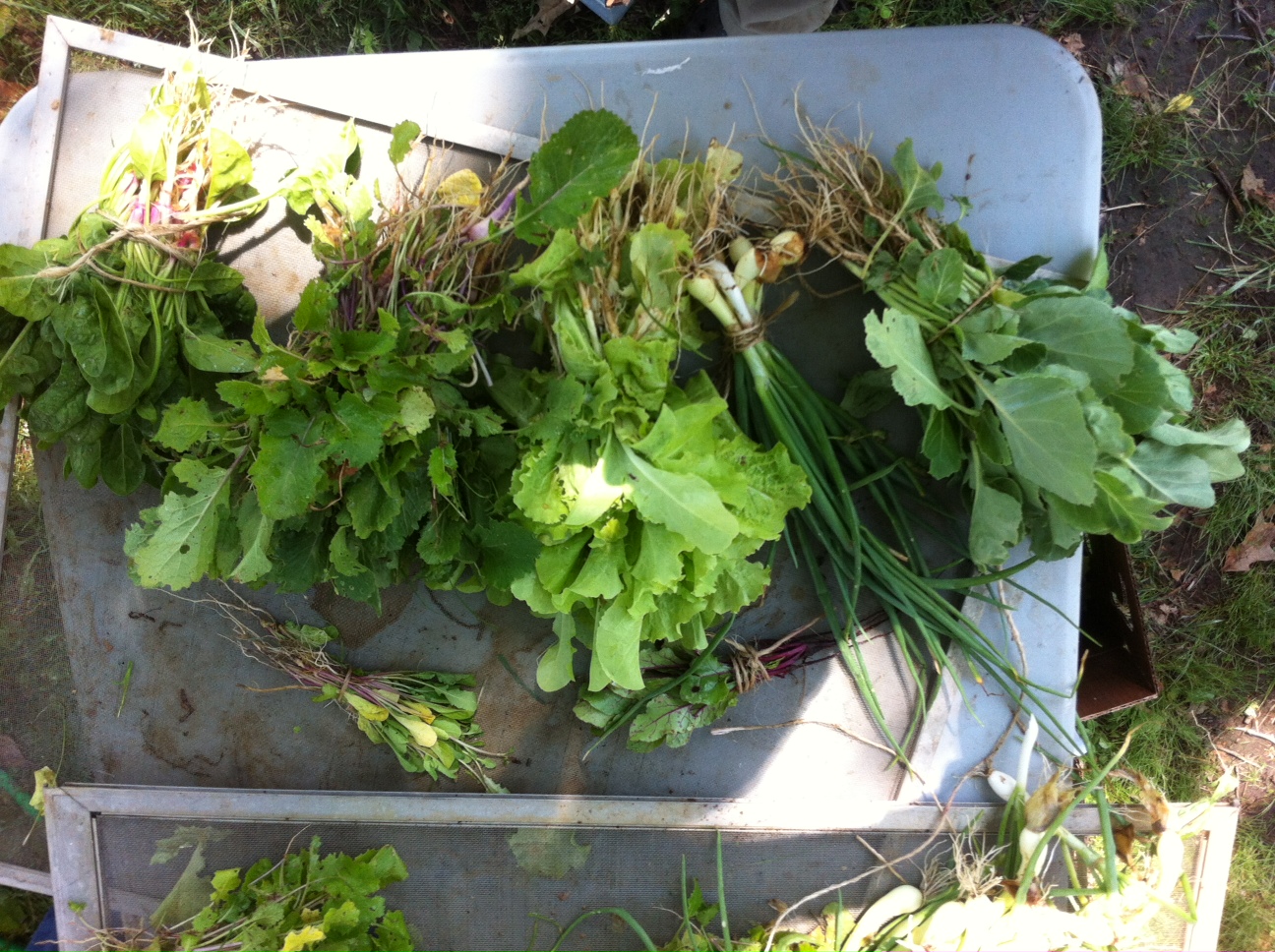
Red Russian kale, giant kale, mustard greens, green leaf lettuce, lemon balm, green onions, fresh garlic.
Welcome to the Spring 2015 CSA! Here is what we have in the box this week:
Green leaf lettuce (in the bucket)
Green onions
Green garlic: One of our favorite tastes of spring. Use it like you would green onions; it is not so pungent as mature garlic. You won’t believe the amazing flavor–and you will probably never find this in the store. Here are links to several recipes to make the most of this spring treat!
Mustard greens: This is a wonderful spring green; we usually sauté them with just a little garlic, olive oil, and balsamic vinegar. Here is a recipe if you don’t feel like “winging it”.
Red Russian kale: For both of our kales, you can’t go wrong making kale chips (warning: they are addictive.) Chips not your thing? Try kale in a frittata. Hint: the recipe doesn’t call for it, but a little green garlic would be amazing here.
Giant green kale
Lemon balm: What do you do with this? Well, you can take it outside (or to a pot) and bury 1/2 the stem–it should root and make more lemon balm. Otherwise, use it in iced tea, in a lemon julep (in place of mint), or in a salad (chop the leaves so they aren’t scratchy). The lemon flavor doesn’t hold up to long cooking, but the scent is amazing and a lemon balm tea is soothing.
As usual, we rinse our veggies before they come to you–but they do come right out of the garden. We don’t use herbicides or pesticides, but bugs and dirt do occasionally come along for the ride. We recommend washing your veggies before you eat
It takes a village to fill a box. With the strange weather this spring, we’ve had to replant some things and others are either gone or off schedule. Enter two other farms: Tim and Betty at Oleo Acres and Michael at the farm-formerly-known-as Cluck-N-Neigh.
Tim provided the sweet potato, basil, and oregano; their farm has frequent events and an active web presence (look for them on The FaceBook). Michael provided the June apples and the Mirabelle plums. Thanks, friends!
Plums, apples, onions, beets, mixed kale and collards, sweet potato, basil, and oregano!
Since you have seen kale, onions, and beets I’ll focus on what is new this week:
Apples: These are semi-tart and totally untreated with any pesticides or wax. We love them raw, but they are also amazing baked. If you are feeling crazy, bake them with brie.
Plums: Mirabelle plums are tiny and sweet (if you have a few that are firm and green/yellow, put them in a paper bag overnight. Eat them like candy, or try plum galette.
Sweet potato: Yes, you can bake this, roast it, boil it, as you please. IF you have a spiral veggie slicer, spiral apple peeler, endless patience with a knife, or a bored friend try this: turn the whole potato into one long noodle (or two or three if they break.) Drizzle with olive oil, add chopped oregano, salt and pepper, and grill.
Basil: It is all better with basil. If you have never thought of basil in dessert, now is your chance. Use it with anything chocolate, or try basil ice cream!
Oregano: You can plant this in damp sand or soil and possibly get rooted cuttings. Or, use it in your cooking–see sweet potatoes above. Don’t restrict this to italian food! Mexican, greek, indian–they all work with oregano. (Try it chopped over hummus!)
Thanks for being part of the spring CSA! We have exactly one small cucumber, with many more on the way–plus peppers, tomatoes, eggplants, and more. Stay tuned for summer!
Finally, a sunny day (even though it rained again in the evening) for our Thursday CSA delivery. This spring has been both unusually cool and ridiculously wet–and because of that we have lost crops. The CSA rolls on, but our summer crops that we should have been starting to pick (squash, beans, chard, etc.) are either delayed, stunted, or replanted.
Leftish to right: Kohlrabi, radishes, sage sprig, collards (with the red ribbon), baby swiss chard, onions, kale (tied with twine).
On the brighter side–we have had a spectacular run of greens! With one week to go, this week’s box is light, but we should be able to finish strong in week 6. And, even though the box is not as full as we had hoped, we do have a new addition: kohlrabi!
Kohlrabi: This unique plant is delicious raw or cooked. The fleshy bulb-like stem has an almost nutty flavor, and the leaves can be used like any other green (see collards). Note that a few of our kohlrabi had either cracked stems from incessant rain or munched leaves–but they will still be delicious. It is great roasted, but here are 5 recipes to get your mind going.
Radishes: Tired of radishes? Still using them in salad? Try a radish martini.
Sage: Sure, you can let this dry and burn it like incense to clear away stale air–but you can eat it, too. Sage doesn’t get enough play in American food. That sage sprig is just enough to make a butter and sage sauce to pour over pasta (I’d add a caramelized onion, too!)
Baby chard: The chard makes us a little sad–because it was coming along beautifully until the big storm last week. Since then we’ve seen it struggle, and so decided to harvest it now to make room for another crop for summer. Baby chard is especially tender; chop and saute it with some garlic in a little olive oil–add pumpkin seeds and a splash of hot sauce, salt and pepper.
Two years ago, we were covered up in beets. CSA members complained–too many beets! This year, we planted and replanted and the beets are just now coming in. This is a great example of how crops can vary from year to year, depending on the climate and other factors. Never fear, though! Thursday boxes contain at least one (large) or a few (small) golden beets–the finest, most beettastic root veggie that I can think of.
This weeks box contains:
Golden beets! The greens are delicious (the greens are, essentially, Swiss chard) and the root is great raw or–better yet–roasted. Wrap the whole root in foil and bake it like a potato. The skin will slide off and you will be left with sweet, beety, deliciousness.
Onions
Turnips: we actually plant two varieties of turnips. “Purple top” makes a beautiful white and purple root, and “seven top” makes a somewhat homely roost but beautiful greens. This week you get both, in two bunches.
Lemon balm: this is in the mint family and has a strong lemon scent. It is wonderful in a salad dressing, on a salad, or cooked (like in this lemon balm cheescake).
Reminder! Please return your empty CSA boxes! We have 2 boxes per CSA share, and each week we fill one and hope to get one empty back.
I love the spring rain. One of my favorite outdoor activities is running in the rain, but I also like picking veggies in the rain. Shoes become useless weights, and I get to feel the squish of mud between my toes–somehow that squish makes my feet feel cleaner, less embalmed and more alive.
This week we have another full box with a couple of new non-green items, plus more spring greens! Read on after the break.
Spring 2014–Week 1! Spinach, Mustard/turnip greens, Lettuce, Green Onions, Collards, Arugula, baby beet greens.
Welcome to the Oak Hill Farm Spring 2014 CSA!
A few opening notes:
You should wash your veggies before eating them. We rinse them lightly when they come from the garden, but there may still be soil or critters attached.
“There are holes in the leaves!” We try to keep munching insects to a minimum, but the bugs need to eat, too! We grow without synthetic pesticides or herbicides, so some hitchhikers are to be expected.
Check the blog each week for a list of box contents and recipe ideas.
Now, on to the contents! This week we are heavy on leafy greens:
Green leaf lettuce: Super fresh, great for salads (of course) but try it as a wrapper for chicken lettuce wraps.
Spinach: Popeye was right, but his was never this fresh. Everyone has their favorite way to eat spinach; this spring we are on a saag paneer kick!
Collard greens: A favorite way to cook collards or ANY other leafy green: sautee garlic/onions in 1tbsp olive oil, add greens to wilt; once wilted, add salt/pepper and a sprinkle of balsamic vinegar. Serve with hot sauce if desired.
Turnip/mustard greens: Some boxes may include tiny turnips; we love mixed turnip/mustard greens with chopped turnips prepared as above (see collards).
Baby beet greens: Just a taste, add them to a salad or other greens for color. Look for more, larger, beets (and greens) in later boxes.
Green onions: We should have a steady supply of onions for the next few weeks.
Mint: An extra treat (not pictured) just to make the box smell nice. If you plant it in the next day or so into damp soil in a pot, you can start your own mint garden. Also great dried, fresh, in tea, or 1000 other ways!